

Contact Me
Books About Writing
Scroll down for some questions about writing and writing tips….
The Writers’ & Artists’
Guide to Writing for Children and YA
‘An essential read for everyone interested in the art, craft and business of writing.’ Malorie Blackman
Published November 2019
A writing handbook –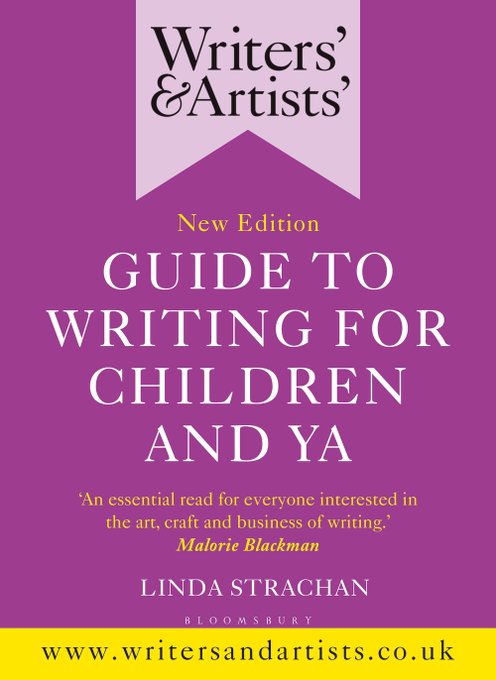 for anyone writing for children and Young Adults
Whether you are a published author, a writer in the middle of your first book, or just thinking about writing for this exciting and challenging market, there is something here for you.
The W&A Guide to Writing for Children and YA provides informed, practical advice from a successful and experienced writer of children’s books across all ages. Its coverage includes picture books through middle grade and young adult; fiction and non-fiction; books for reluctant readers and books for the education market. It is one authors lifetime of experience distilled into an engaging guide on how to manage, kickstart or begin your writing career. This is a heavily revised and expanded edition of Linda’s Writing for Children (2008). Much has happened in both Linda’s writing life and in the world of children’s books since then. Staying true to the essence of the original, the new edition includes more advice and experience to reflect changes in digital publishing, self-publishing, and the explosion of YA and children’s writing more broadly.
Some reviews –
the original 2008 edition Writing for Children
‘Linda Strachan has put together an eminently sensible guide for those who want to break into the world of children’s books. It is warmly and accessibly written, using examples from the author’s own considerable experience, together with snippets of advice and comment from many other writers.’
‘I’m going to recommend this book to all wannabe children’s writers “The most important thing is to write well and be true to the story” – you can’t really beat that as a piece of advice. Together with the A & C Black Children’s and Artists’ Yearbook (updated annually) it will be an invaluable resource.’ Amadillo
This edition has an article I wrote about writing for children in a digital age
Writing tips and questions
Here are some general tips and information about writing and getting published from my blog Bookwords
You can also check out my blog posts on ABBA (Awfully Big Blog Adventure)

and also on Picturebook Den

Questions about writing 1#

So this post on writing was sparked off by some of questions. I would welcome the thoughts of other writers, editors and agents out there – because when it comes to specifics about writing a lot of it is a huge grey area with all sorts of different points of view. After all if it was that simple there would be a list of rules and anyone who followed them would be an instant success.
Here are two quite different questions from Kirsty and Tasnim.
 n I was researching for my book Writing for Children I spoke to a number of editors at some of the larger publishers and the consensus was that they were reluctant to suggest word length at all. They said that books were more ‘author led’.
I think that what they mean is that it is the story, and the way the author tells it, will dictate the length that works for that particular story. As always the story must be as long or as short as it needs to be but I know how confusing that can be if you are starting out. I suppose it can also depend on whether you are writing for the top or lower end of that age group, and even then books vary so much.
My advice would be write your book and see how long it is and then go to a good bookshop and look at books similar to the one you are writing.
Observe the variations in length and which publishers are publishing that kind of story. If it looks like your story is far too long you may want to have a second look and see if your story is really as well written as you can make it. It needs to interest the reader from start to finish, and make sure you haven’t made it longer than it needs to be. Don’t waffle to make it longer. Kids hate that.
Q2- from Kirsty – Who says she is good at writing stories but wanted to know how to make her writing more interesting.
Kirsty – If you want to make your stories more interesting there are a few things you need to think about. The beginning of your story should make the person reading it desperate to keep reading. You know, the kind of story that makes you beg for a few more minutes before you have to turn off the light and go to sleep.
Start your story with something happening and don’t have a long drawn out beginning. Your characters could be running away from something, or having an argument or a fight. If you begin with your main character being worried about something that’s going to happen, or something that they have done; that can make you want to read on. But don’t tell everything at once. Give little clues so that the person reading it wants to discover what is wrong, or what it is they did.
 When I am writing I like to think of it like a film running in my head as I write. If I can imagine it happening, and if I know my characters well enough, I get so wrapped up in the story that I don’t want to stop until it is finished.
Sometimes when I start to write I don’t know how the story will end but that doesn’t matter too much. Although I do like to stop after a bit and think about what the end of the story might be. Even then I often don’t quite know how I am going to get my characters to the end I have planned.
But for me, that is the fun of writing.
2 comments:

- Thanks, Linda, for such an informative, useful and interesting post. Having only written short stories, poems and articles before, I embarked on NaNoWriMo this year and I am now 67,000 words into my 1st novel which I have aimed at the 9-13 year old market. I had no idea what or who I was going to write about until a week before I started and I was worried about how long it should be. Bit your info above has helped. Many thanks Julie xx

Well done. It is often really difficult to get down to writing something like a novel when you have been writing short pieces for a while.
I love it when I get to the end of the first draft of a story because then there is something to work with, the fine tuning and editing is often as fascinating as working out the plot. Except for the times when you look at a bit of writing you are really proud of and realise that it just has to go – then you have to ‘murder your darlings’ and that can be hard.
Questions about writing #2 – Writing for ‘children’
This question came from Jacqueline who is writing a ‘children’s story’ set in space. (If you read this, Jacqueline, please email me again – I couldn’t reply because the email address was incorrect)
A space story could be a picture book perhaps something like Stella to Earth by Simon Puttock
 or Simon Bartram’s stories about Bob (the man on the moon) such as Bob and the Disappearing Moon
So if you are thinking of writing for children, or have written a book or a short story for ‘children’ please go back and think about who it is for and what kind of book that child will be wanting to read or have read to them. See which publishers publish which kind of books – so that you are informed about the market.
If you want to get your story published you do need to know what kind of books are being published NOW for children today. Don’t rely on what you might remember about when you were a child but go to the bookshops and look at the books. Read them and see how long they are, if there are pictures, and the way the story is told. Find out where your story fits in generally.
After that you may have to change your ideas or the way your story is told and don’t mistake a shorter book or a picture book for being one that is easier to write. Usually the fewer words there are, the harder you have to work to get it right.
If you do all these things there is still no guarantee that you will be published, no one has the right to expect a publisher to put out money to publish and promote a book unless they believe it will sell enough to make more than it cost them – that is only common sense!
My best advice is – be professional, get to know the market and make it the very best you can.